
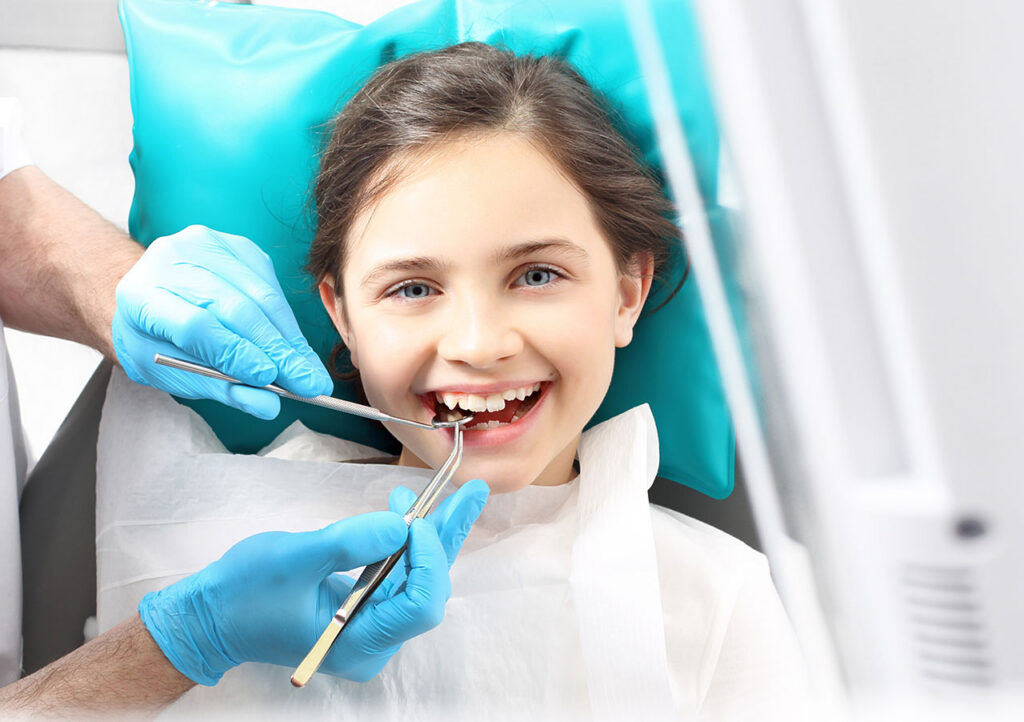
Baby teeth may be temporary, but the space they hold is not. When a child loses a baby tooth too early, the nearby teeth often drift into that open spot. That “little shift” can create a bigger problem later, like crowding, crooked eruption, or a bite that does not line up the way it should. A space maintainer is a simple dental appliance that helps prevent those issues by keeping room open for the adult tooth that is still on its way.
If your child had a tooth removed because of a cavity, trauma, or infection, this guide explains how space maintainers work, when they are recommended, what the process feels like, and how to care for one at home.
What a Space Maintainer Does
A space maintainer is an appliance that holds space open after a baby tooth is lost early. It acts like a placeholder, so the surrounding teeth do not tip, lean, or slide into the gap. When the adult tooth is ready to come in, the space maintainer is removed, and the tooth can erupt in a better position.
Not every early tooth loss needs a space maintainer. It depends on which tooth was lost, the child’s age, and how close the adult tooth is to erupting. Your dentist evaluates these factors and recommends a plan that fits your child’s growth timeline.
Why Early Tooth Loss Can Cause Bigger Problems
Kids’ mouths are constantly changing. Teeth are erupting, jaws are growing, and spacing is shifting. When a baby tooth is lost too early, the teeth behind it may drift forward, and the teeth in front may drift back. Over time, that movement can reduce the space that the adult tooth needs.
If the adult tooth erupts without enough room, it may come in rotated, crowded, or trapped under the gum. That can increase the chance of needing orthodontic treatment later, or at least make orthodontic treatment more complex.
Think of the baby tooth like a “parking spot” sign. When it disappears too soon, other teeth may park in that space, and the tooth that belongs there later has nowhere to go.
When Dentists Often Recommend Space Maintainers
A space maintainer is often considered when:
- A baby molar is lost early, especially in the back of the mouth
- The adult tooth is not close to erupting yet
- There is already crowding, tight spacing, or bite issues
- Multiple baby teeth were lost early
- The tooth loss happened before the typical exfoliation age
Your dentist will review eruption timing and spacing using an exam and, when appropriate, digital X-rays. The goal is to avoid problems, not to “over treat.” If the adult tooth is expected soon, your dentist may recommend monitoring instead.
Types of Space Maintainers, Explained Simply
There are different kinds of space maintainers, and the best one depends on which tooth was lost and how many teeth are missing.
- Band and loop: A small band wraps around a nearby tooth, with a loop that holds the open space. This is commonly used for one missing baby molar.
- Lower lingual holding arch: A thin wire rests behind the lower front teeth and attaches to back teeth, helping hold space when more than one tooth is missing.
- Nance appliance: A similar design for the upper arch, using an acrylic button against the palate for stability.
- Removable space maintainer: In some cases, a removable appliance can be used, but this depends on a child’s age and ability to wear it consistently.
Your dentist will choose an option that is stable, comfortable, and realistic for your child.
What the Appointment Is Like
Placing a space maintainer is usually simple. Many children do not need numbing. The dentist takes measurements or scans, and the appliance is created to fit your child’s mouth. At the delivery visit, the fit is checked carefully, and small adjustments are made so it feels smooth and secure.
A new space maintainer may feel “different” for a few days, especially on the tongue or cheek. That is normal. Most kids adapt quickly and forget it is there.
Home Care Tips That Matter
Space maintainers work best when they stay clean and stable. Good habits prevent gum irritation and prevent the appliance from loosening.
Here are simple, effective tips:
- Brush twice a day, especially around the band area
- Floss daily, using a floss threader if needed
- Avoid very sticky foods that can pull on the appliance, like taffy, gummy candies, and chewing gum
- Do not pick at it with fingers or pens
- Keep regular dental checkups so the fit can be monitored
If the appliance feels loose or pokey, do not wait. A quick adjustment can prevent sores or breakage.
Why This Matters, Supported by Professional Guidance
Professional pediatric dental guidance emphasizes that primary teeth help guide adult teeth into place. When those teeth are lost early, maintaining space can reduce the risk of future crowding and bite problems. Clinical research supports the idea that space maintainers, when used in appropriate cases and monitored regularly, can preserve arch length and help adult teeth erupt in a healthier position. In plain terms, a space maintainer often helps protect your child’s future smile by preventing a problem from becoming bigger over time.
Common Questions Parents Ask
Will my child talk funny? Some kids lisp for a day or two, then speech returns to normal quickly.
Does it hurt? It should not. Mild pressure is normal at first, but pain or sores mean it needs adjustment.
How long does a space maintainer stay in? It depends on eruption timing. Your dentist monitors and removes it when the adult tooth is ready.
What if it falls out? Keep it, bring it in, and call for an appointment. Leaving the space open too long without the appliance can allow shifting.
Can my child still play sports? Yes. If your child plays contact sports, ask about a mouthguard, it can protect teeth and appliances.
Signs You Should Call the Dentist
Contact the office if you notice:
- The space maintainer is loose or missing
- A wire is poking the cheek or tongue
- Gums look swollen around the band
- Food is getting trapped and causing irritation
- Your child is avoiding chewing due to discomfort
Small issues are easy to fix when caught early.
Helping Your Child Feel Confident
Kids often worry about anything “new” in their mouth. Keep it simple and positive. Explain that the space maintainer is a helper, it keeps the tooth spot open so the grown up tooth can come in the right place. Praise your child for good brushing and for letting you know if anything feels weird.
A space maintainer is a small appliance with a big purpose, it protects space, supports healthier eruption, and can reduce the chance of bigger alignment problems later. If your child lost a tooth early and you are unsure what comes next, an evaluation can bring clarity and peace of mind. Book an Appointment with All About Smiles in Rogers, AR, or call 870-669-1507 to Schedule a Consultation.