
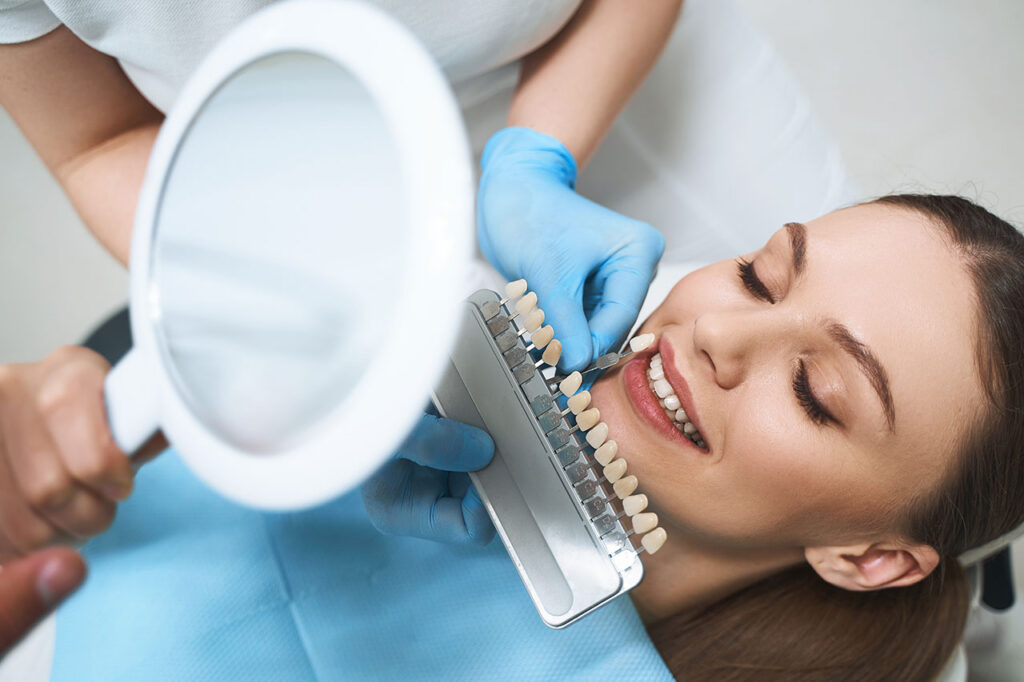
Porcelain veneers have a reputation for “movie-star smiles,” but that’s only half the story. The real value of porcelain veneers is control: you can change shape, brightness, and symmetry in a way that still looks like you—just more polished. If you’ve ever looked in the mirror and thought, “My teeth are healthy, but they don’t match how I want to look,” veneers may be worth discussing.
This guide covers what porcelain veneers can fix, who makes a good candidate, what the process feels like, and how to protect your investment for years.
What Porcelain Veneers Actually Are
Porcelain veneers are thin shells of high-strength ceramic bonded to the front surface of teeth. Each veneer is custom-made to match your smile design—shade, contour, length, and texture. Once bonded, porcelain veneers become a durable outer layer that changes how the tooth reflects light, which is a big reason they look natural.
Porcelain veneers are most often used on the front teeth, where appearance matters most and biting forces are manageable. They can correct multiple issues at once, which is why they’re popular for “smile makeovers.”
What Porcelain Veneers Can Fix (And What They Can’t)
Porcelain veneers are great for:
- Chips and worn edges
- Gaps between teeth
- Mild crowding or uneven shape (when orthodontics isn’t the goal)
- Stains that don’t respond to whitening (like certain internal discolorations)
- Teeth that look too small, too short, or slightly asymmetrical
Porcelain veneers are not the best solution for:
- Active gum disease (must be treated first)
- Heavy grinding without protection (a night guard may be needed)
- Severe bite misalignment (orthodontics might be step one)
- Teeth with very little enamel left (a crown may be a better option)
- Very large fillings that weaken the tooth (again, crowns may win)
The goal isn’t to “force” porcelain veneers into every situation. It’s to choose the most conservative treatment that delivers a stable, beautiful result.
Candidacy: The Big Questions Dentists Ask
A good porcelain veneers candidate usually has:
- Healthy gums (no uncontrolled inflammation or deep pockets)
- Healthy teeth (no untreated decay or unresolved infections)
- Enough enamel for strong bonding
- A bite that won’t overload the veneer edges
- Realistic goals (natural-looking improvement, not a copy-paste smile)
During an exam, your dentist evaluates gum health, tooth structure, and bite forces. Photos, X-rays, and sometimes digital scans help plan details like tooth length, smile line, and how your lips move when you talk and smile. That last part matters more than people expect—porcelain veneers should look good in motion, not just in a still photo.
The Process: What Happens Step by Step
Most porcelain veneers cases follow a similar flow:
1) Planning and design
You discuss goals: brighter but natural? More symmetry? Close a gap? A “test drive” mock-up may be used so you can visualize the direction.
2) Conservative preparation
A small amount of enamel is usually shaped to create space for porcelain veneers and to ensure a seamless edge. This step is done with local anesthesia if needed.
3) Temporary veneers (often)
Temporary covers protect teeth and let you preview shape and length. They’re not as strong as porcelain, so you’ll avoid sticky or very hard foods.
4) Final bonding
When the porcelain veneers return from the lab, the dentist tries them in, confirms shade and fit, then bonds them carefully. Bonding is the make-or-break step. It requires precise isolation, clean surfaces, and a balanced bite.
What Porcelain Veneers Feel Like After They’re Placed
Most people say veneers feel “normal” within a few days. Your tongue may notice edges at first, but that fades. If a bite spot feels high, a quick adjustment prevents unnecessary stress on the porcelain veneers. Mild temperature sensitivity can happen early, especially if teeth were already sensitive, but it often resolves as tissues settle.
Benefits, Supported by Professional Sources
Professional dental organizations like the ADA emphasize conservative dentistry and the importance of appropriate case selection for cosmetic procedures. In prosthodontic and restorative dentistry literature, porcelain veneers are widely recognized for strong esthetics, color stability, and longevity when bonded properly to enamel and when bite forces are controlled.
Peer-reviewed studies consistently report high patient satisfaction with porcelain veneers, especially for improving shape, color, and symmetry. Research also shows that ceramic materials maintain their shade over time better than many direct resin options, which is why porcelain veneers are often chosen for long-term cosmetic outcomes. The common theme in the evidence is simple: the best results come from good planning, healthy gums, and protective habits.
Keeping Porcelain Veneers Looking Great
Porcelain veneers aren’t “maintenance-free,” but they’re not high-maintenance either. Think of them like a nice car finish: durable, but worth protecting.
- Brush twice daily with fluoride toothpaste. Yes, porcelain doesn’t decay—but the tooth underneath can at the margins.
- Floss daily. Keeping gums healthy prevents recession that can expose edges.
- Avoid using teeth as tools. No opening packages, biting pens, or chewing ice.
- Limit stain-heavy habits. Porcelain veneers resist stains well, but the natural teeth next to them can darken over time.
- Wear a night guard if you grind. Bruxism is one of the biggest causes of veneer chipping.
Professional cleanings help, too. The team uses polishing methods safe for porcelain veneers so the surface stays smooth and glossy.
Porcelain Veneers vs. Bonding vs. Crowns
If you’re choosing among cosmetic options, here’s the simplest comparison:
- Dental bonding is fast, conservative, and repairable, but it can stain and wear faster than porcelain veneers.
- Porcelain veneers offer stronger esthetics and stain resistance, with excellent longevity when planned well.
- Dental crowns cover the entire tooth and are better when the tooth is weak, heavily filled, or cracked.
Your dentist’s job is to match the tool to the tooth. Sometimes a “combo plan” is best—porcelain veneers on visible front teeth, bonding for tiny tweaks, and crowns where strength is the priority.
Common Questions People Ask
Do porcelain veneers ruin your teeth? When done appropriately, preparation is conservative and designed to preserve health. The key is proper diagnosis and planning.
Can I whiten porcelain veneers later? Whitening products don’t change porcelain. If you want a brighter shade, choose it at the beginning, or whiten natural teeth first so everything matches.
How long do porcelain veneers last? Many last a decade or longer with good care. Longevity depends on bite, hygiene, and habits like grinding.
What if one chips? Small chips can sometimes be repaired; other times a single veneer is replaced. Keeping bite forces balanced reduces risk.
A Smile That Still Looks Like You
The best porcelain veneers don’t scream “veneers.” They look like naturally beautiful teeth—clean edges, balanced proportions, and a shade that fits your skin tone and personality. If you’re curious, start with a consultation and a conversation about goals. You may be surprised how much can change with a few carefully designed porcelain veneers.
Schedule a Consultation with All About Smiles in Rogers, AR, or call 870-669-1507 to Book an Appointment.