
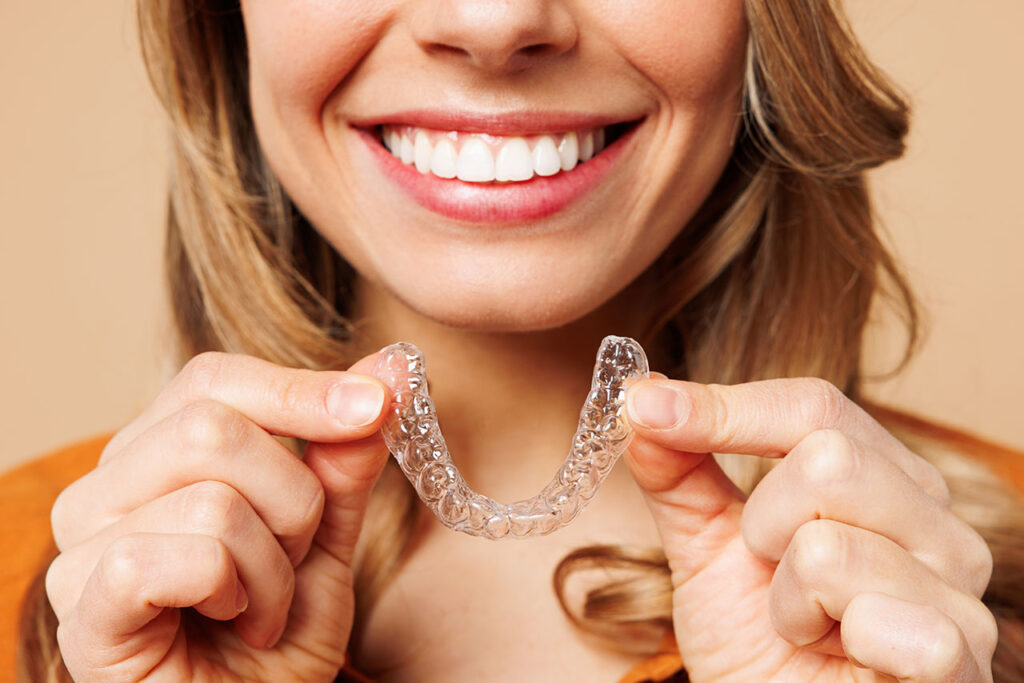
If you’ve noticed crowding, gaps, or a bite that doesn’t feel quite right, you may be weighing two paths: clear aligners such as Invisalign® or time-tested metal braces. Both can deliver healthy alignment and a more confident smile. The right choice, however, depends on your goals, timeline, habits, and budget. Here’s a side-by-side, patient-friendly guide to help you decide.
Why Straighter Teeth Matter (Beyond Looks)
While straighter teeth certainly look great, alignment also makes daily life easier. Properly aligned teeth trap less plaque, are easier to clean, and distribute biting forces more evenly—protecting enamel and jaw joints. In addition, improved alignment can reduce abnormal wear on edges and help restorations last longer. If you’re already considering esthetic upgrades like whitening or veneers, orthodontic correction first often yields better, longer-lasting results. Explore our broader cosmetic options here: Cosmetic Dentistry.
Clear Aligners At A Glance
How they work: A series of custom, removable trays gradually shift teeth into place. You’ll wear each set for about 1–2 weeks before moving to the next.
Pros many patients love
- Nearly invisible for everyday confidence
- Removable for meals, photos, and brushing
- Fewer food restrictions (enjoy popcorn again!)
- Easier hygiene—just remove, brush, and floss
- Often shorter chair visits
Potential trade-offs
- Must wear 20–22 hours/day for results
- Trays can be misplaced if removed often
- Complex rotations or vertical movements may need extra time or attachments
- You’ll change trays on schedule—compliance is key
Traditional Braces At A Glance
How they work: Brackets bonded to teeth are connected by a wire that your orthodontic team adjusts over time to guide movement.
Pros many patients value
- Excellent control for complex cases
- Always “on”—no forgetting to wear them
- Broadly effective across all ages and tooth movements
- Fewer issues with patient compliance
Potential trade-offs
- More visible (though clear/ceramic options exist)
- Food restrictions (no sticky caramels or hard nuts)
- More meticulous cleaning around brackets and wires
- Occasional wire pokes or bracket repairs
Which Is Faster?
“Speed” depends on your unique tooth movements and how consistently you wear aligners. Simple crowding may finish in 6–9 months with aligners; more involved cases can take 12–24 months with either method. Because braces are always at work, they’re sometimes more predictable with complex rotations or significant bite corrections. During your consult we’ll estimate your timeline based on digital scans and bite analysis. For related bite-protective options, see Oral Appliances.
Comfort And Everyday Life
Clear aligners usually feel smooth against cheeks and lips, though the first day of a new tray can bring mild pressure. Braces may cause occasional soreness after adjustments and can irritate cheeks at first (orthodontic wax helps). For athletes and musicians, aligners’ removability is appealing; for busy teens, braces remove the “Did you wear your trays?” debate.
Eating, Drinking, And Social Events
Aligners must come out for anything but plain water. Braces stay in 24/7, but crunchy or sticky foods are off the menu until treatment ends. If you meal-prep, dine out frequently, or attend events where photos matter, aligners’ flexibility can be a lifestyle win. If snacking is frequent and you tend to forget, braces may suit you better.
Oral Hygiene And Dental Health
With aligners, you’ll remove trays to brush and floss as usual—simple. With braces, a little extra finesse is needed: interdental brushes and floss threaders help clean under the wire. Either way, staying on schedule with professional cleanings reduces the risk of decalcification (white spots), gingivitis, and tartar buildup. If you grind your teeth at night, aligners may offer a protective buffer; after braces, we often recommend a night guard to preserve your results.
Cost And Insurance
Fees depend on complexity, length of treatment, and the technology used. Dental insurance may cover part of orthodontic care for teens and, in some plans, adults. We’ll review transparent pricing and any phased options so you can choose confidently.
Retainers: The Non-Negotiable Finish Line
Regardless of your path, retainers keep your investment in place. Teeth naturally drift over time, so nightly wear (especially the first year) is essential. We’ll tailor a retainer plan—clear, fixed, or both—so your smile stays camera-ready.
Who’s A Candidate For Each?
- Best for aligners: Mild to moderate spacing or crowding; motivated adults or teens who value removability and esthetics.
- Best for braces: Complex rotations, significant bite changes, or patients who prefer a set-and-forget option without removable trays.
Your Next Step
Curious which approach fits you best? We’ll evaluate your bite, discuss goals, and map a realistic timeline you can live with—no pressure, just clarity.
Ready to explore orthodontic options? Contact All About Smiles in Rogers, AR at 870-669-1507 to Schedule a Consultation and compare aligners and braces with a personalized treatment plan.